Campsite guides
Dog-friendly club campsites in the UK
Adrian Turcsan · 4 August 2026 · 5 min read
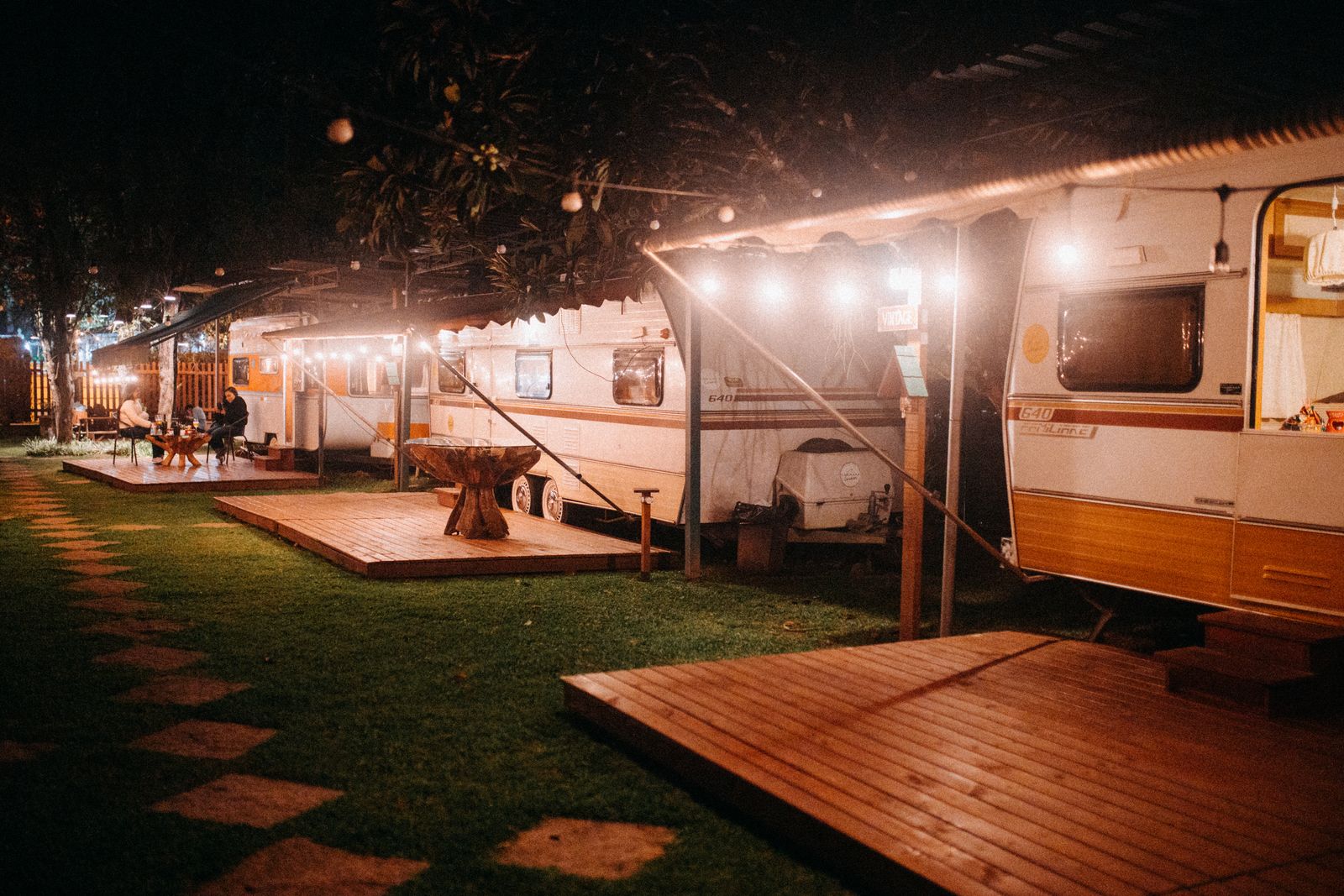
What dog friendly means on a club site, the two-metre lead rule, breed restrictions, dog walks on site versus from site, and four sites worth the drive.
Every club site in Britain will tell you it accepts dogs. What that means in practice ranges from a fenced exercise paddock and a gate straight onto a forest track, to a strip of grass by the bin store and a two-metre lead rule enforced by a warden with a clipboard. The listings use consistent language once you know what the terms mean.
Details below were checked in August 2026.
What the rules actually say
The Caravan and Motorhome Club's site rules are worth reading properly before your first trip.
No breed listed under the Dangerous Dogs Act 1991 is permitted on club premises. That list was extended by the Dangerous Dogs (Designated Types) (England and Wales) Order 2023, which added the XL Bully with effect from February 2024. If you own one, club sites are closed to you regardless of exemption certificates.
Dogs must be contained securely, either inside your outfit, in an appropriately ventilated vehicle or in a purpose-designed cage, and must be on a lead no more than two metres long at all times when out. The two-metre limit rules out the flexi-lead most people own, which is worth knowing before a warden mentions it.
Dogs are not allowed in reception, toilet blocks, laundries or any other building. Assistance dogs are the exception. You must clear up after your dog and use the designated dog walk where one exists. Quiet hours run from 10pm, and a dog barking at 11pm is a noise complaint like any other.
Dogs cost nothing at Caravan and Motorhome Club sites. Infants under five, dogs and awnings are all free of charge.
The two facilities that matter
Site listings distinguish between a "dog walk on site" and a "dog walk from site", and the difference decides whether you enjoy the week.
A dog walk on site is a designated area within the site boundary, usually a grass strip or a small paddock, sometimes fenced. It handles first thing in the morning and last thing at night.
A dog walk from site is a route that starts at the gate. This is the one that matters. It means you can do a proper walk without loading the dog into the car, which is the whole point of taking a dog touring.
Plenty of sites have both. Some have neither and expect you to drive.
Four sites worth knowing
Bunree, Onich, near Fort William. Ninety-nine pitches, all hardstanding, on the shore of Loch Linnhe with mountains across the water. It has a dog area on site and a dog walk from site. The forest walk to Onchree Falls starts nearby, and Ben Nevis is close enough for a day out, though allow around seven hours. Reopened in August 2025 after redevelopment. If you want a site where the dog can be in the water within two minutes of the pitch, this is it.
Coniston Park Coppice, Cumbria. Set in 63 acres of National Trust woodland with 205 hardstanding pitches, ten camping pitches and seventeen glamping pods, arranged in glades rather than rows. There is a dog walk, and Grizedale Forest and Coniston Water are both close. Green Tourism Gold accredited. The woodland setting means shade in July, which matters more with a dog than most people plan for.
Carsington Water, Kirk Ireton, Ashbourne, DE6 3JL. One hundred and five touring pitches, ninety-six of them hardstanding, in the Peak District. It has a dog walk on site and a dog walk from site. The full circuit of Carsington Water is about eight miles, which is a genuine day's walk from the gate, and the visitor centre is fifteen minutes on foot. Open March to November.
Black Knowl, Brockenhurst, Hampshire, SO42 7QD. One hundred and thirty-one touring pitches, ninety-seven hardstanding, maximum outfit length nine metres, set in the New Forest within walking distance of Brockenhurst. There is a dog walk from site, and the wider forest offers over 140 miles of walking track. It is one of the strongest dog-walking locations in the club network, with the seasonal caveat below.
New Forest sites need planning
The New Forest is superb for dogs for eight months of the year and complicated for the other four.
Ground-nesting bird season runs from March through August. Forestry England asks visitors to stay on the main gravel tracks and keep dogs close, because dogs ranging across open heath flush sitting birds, and the birds flying up shows foxes and crows exactly where the nest is. Curlew numbers there are critically low and nightjars have declined by around 18%.
The signage is simple. Orange signs mark areas close to breeding grounds, where dogs should be on leads and you should keep to paths. Red signs mark nesting sites to avoid completely.
Several Forestry England car parks close during the season, including Clayhill, Crockford, Hincheslea, Ocknell Pond, Ogdens, Shatterford and Yew Tree Heath.
The other New Forest factor is livestock. Ponies, cattle, donkeys and pigs roam freely and have right of way. A pony will kick a dog that gets under its feet, and the commoners take a dim view of loose dogs near stock. Keep the lead on until you know the ground.
Practical things that make the difference
Choose the pitch carefully. Ask for a pitch near the dog walk gate rather than near the toilet block. You will do that walk four times a day, and every trip past a busy amenity block with a dog on a two-metre lead is a small negotiation.
Heat is the real risk. A caravan or motorhome parked in full sun climbs faster than most owners expect, and awnings act as greenhouses. Sites in open fields with no tree cover are hard work in July. Woodland sites like Coniston Park Coppice solve this by default.
Ticks. Anywhere with deer, bracken or long grass means checking the dog every evening. Carry a tick remover. The New Forest, the Lakes and the Highlands are all high-risk.
Adders. Present on heathland across southern England and in parts of Scotland and Wales, most active on warm days from spring through summer, and most commonly bitten dogs are bitten on the nose while investigating. Keep to paths on heath in warm weather.
Water and shade at the pitch. A windbreak plus a groundsheet gives a shaded spot outside the outfit. Take more water bowls than you think you need.
Leaving the dog. Site rules require dogs to be secured within the outfit, a ventilated vehicle or a cage. Nothing in the rules stops you leaving a dog while you go to the pub, but a dog that barks in an empty caravan will generate complaints within an hour, and the wardens will find you. If your dog cannot settle alone, plan the week around that.
Beaches. Most popular UK beaches operate dog bans between May and September. Check the local authority's dates before you book a coastal site on the strength of the beach.
Certificated Locations for dog owners
The five-van sites are often better for dogs than the main club sites. Fewer neighbours, no barrier system, and frequently a farm track you can walk straight onto. The trade is livestock everywhere and an owner whose working dog does not want yours in the yard. Ring ahead, say you have a dog, and ask about sheep. Most CL owners will tell you straight whether it suits.
Common questions
Are dogs allowed on all Caravan and Motorhome Club sites?+
Dogs are welcome on the large majority of club sites from both UK clubs, with a small number of exceptions where a landowner or a nature designation prevents it. Sites usually limit you to two dogs per pitch, require them on a lead of no more than two metres anywhere on site, and ask that they are never left unattended in a caravan or awning. Check the individual site entry before booking.
Do club sites charge extra for dogs?+
The two national clubs do not charge a per-dog fee on their own sites, which is a meaningful saving against commercial parks charging £3 to £5 a night per dog. Certificated Locations set their own rules and a minority do charge. Some sites cap the number of dogs rather than charging for them.
Which breeds are not allowed on club campsites?+
Both clubs exclude dogs covered by the Dangerous Dogs Act 1991, which since February 2024 includes the XL Bully type in England and Wales. Beyond that there is no breed list. Any dog showing aggression can be asked to leave, and that applies regardless of breed or size.
Do club sites have dog exercise areas?+
Many of the larger club sites have a fenced or marked dog walk, often along a field boundary away from the pitches. Smaller sites and Certificated Locations frequently have none, relying instead on nearby footpaths. Site entries list a dog walk where one exists, and it is worth checking if you have a dog that needs a proper run before settling for the night.
Can I leave my dog in the caravan while I go out?+
No. Both clubs prohibit leaving a dog unattended in a caravan, motorhome, awning or vehicle at any time. The rule exists because of heat risk and because a distressed dog barking for hours ruins the site for everyone else. Plan around it: choose sites near dog-friendly pubs and attractions, or use a local day-care service.
Mentioned in this guide
Straight through to the directory entries.
Written by
Adrian TurcsanEditorAdrian runs campingandcaravanclubsites.com. He built the directory after finding that no single source listed the club-run campsite networks of the UK alongside the national caravan and camping clubs of the rest of Europe. Every entry on the site is checked against the club's own published listing before it goes live, and fields the clubs do not publish are left empty rather than estimated.