Touring guides
Taking a caravan to France: the complete pre-departure checklist
Adrian Turcsan · 2 August 2026 · 10 min read
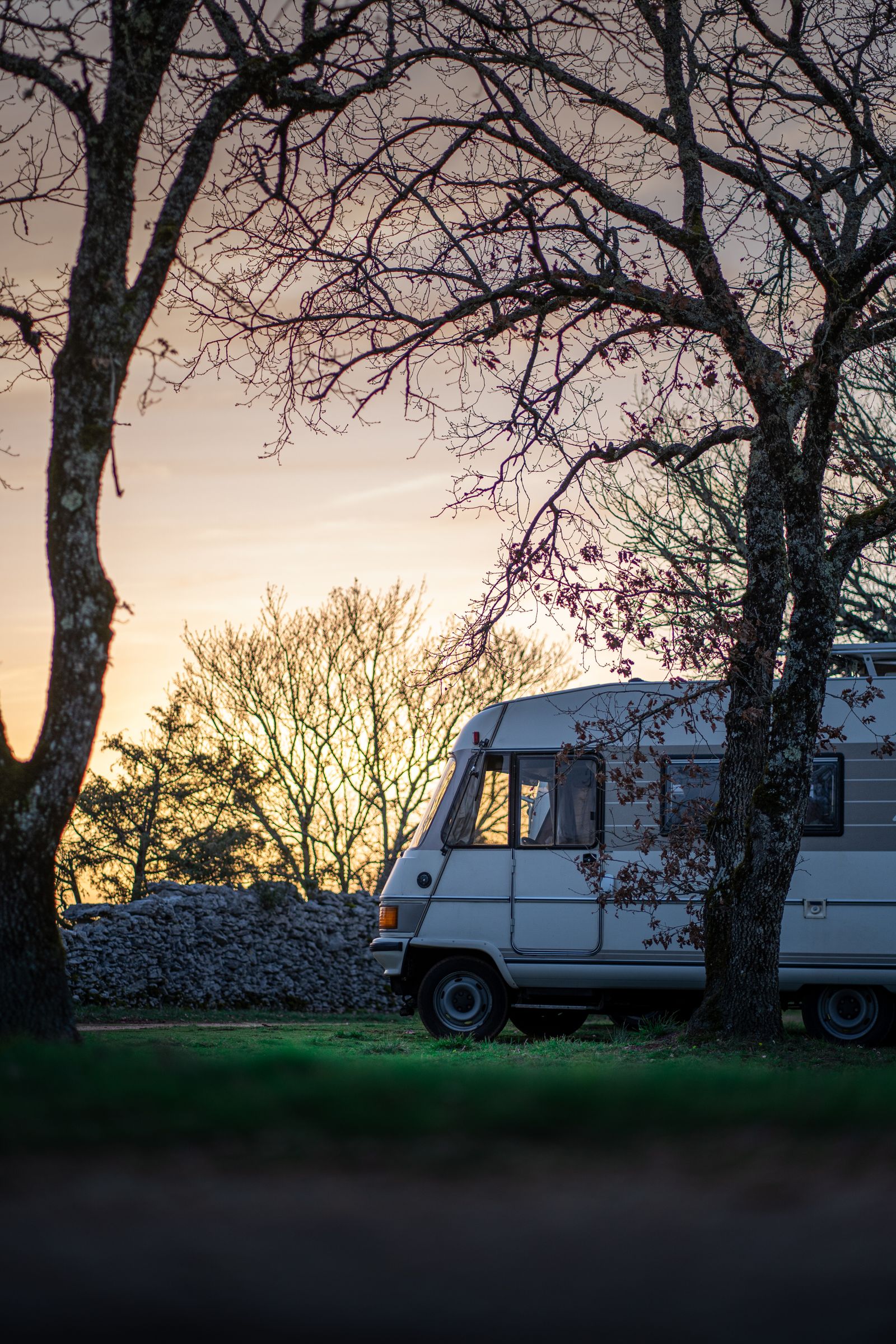
The documents, the mandatory equipment, the towing speed limits by outfit weight, what tolls cost with a caravan on the back, and how aires differ from campsites. A working checklist for a first French tour.
France is the easiest first foreign trip a British caravanner can make. The roads are wide, the campsites are cheap outside August, and you can be pitched up in Normandy four hours after leaving Kent. The paperwork and the kit list are where people come unstuck, usually at a routine gendarmerie stop on a D-road. Work through this checklist once and it stays done.
Documents you must carry
Keep these in the car, not in the caravan:
- Full UK photocard driving licence. No International Driving Permit is needed for a UK licence in France.
- V5C log book for the towing vehicle. If the car is leased or on a company fleet, you need a VE103B certificate instead — the V5C stays with the owner and a photocopy is not accepted.
- Certificate of motor insurance. A Green Card is no longer required anywhere in the EU. Check the policy covers touring abroad and covers the caravan for third-party liability.
- Passport under 10 years old on the day of entry and valid for at least three months after you leave the Schengen area.
- Caravan ownership proof. UK caravans are not registered vehicles, so there is no log book. A CRiS registration document or the purchase invoice settles any question at a stop.
- Breakdown cover documents with the policy number and the French assistance number written somewhere you can read without a phone signal.
- GHIC or EHIC for each traveller, plus travel insurance. The GHIC covers state healthcare only; repatriation needs a separate policy.
- Animal Health Certificate for any dog, cat or ferret, issued by a vet within 10 days of travel, or a valid EU pet passport.
What you need to drive in France: the legal kit list
This is the section that costs people money. French roadside fines for missing equipment are €135, reduced to €90 if paid within 15 days, and each item is charged separately. The list below is what French law requires of a foreign vehicle in 2026.
Mandatory in or on the vehicle:
- UK identifier. Either a UK sticker on the rear of both car and caravan, or number plates that carry the UK letters with the Union flag. GB stickers and the old GB/EU-flag plates stopped being valid on 28 September 2021.
- Headlamp beam deflectors. Compulsory for right-hand-drive vehicles. Many cars built since about 2015 have a "travel mode" setting in the headlight menu that does the same job — check the handbook before buying stickers.
- Warning triangle, carried where you can reach it without stepping into traffic.
- Reflective hi-vis jacket. The legal requirement is that a jacket is inside the passenger compartment and reachable from the driver's seat. A vest in the boot fails the test. Carry one per person; anyone who leaves the vehicle on a carriageway must be wearing one.
- Crit'Air sticker if your route passes through a low-emission zone. See below.
- Winter equipment between 1 November and 31 March in the 34 mountain departments covered by the Loi Montagne. Either 3PMSF-marked winter or all-season tyres, or snow chains carried for two driven wheels. €135 and possible immobilisation for non-compliance.
- Spare prescription glasses if your licence carries the glasses code.
Sensible but not compulsory: first aid kit, spare bulbs, fire extinguisher, breathalysers. The breathalyser rule was formally scrapped in 2020 and carried no penalty even before that. Ignore anyone selling a "France driving kit" on the basis that a breathalyser is required.
Things that will get you fined:
- Radar detectors are illegal, and so is a sat-nav or phone app displaying fixed speed camera locations. The penalty runs to €1,500 and the device can be confiscated, so turn off camera alerts in your mapping app before you sail.
- Headphones or earpieces while driving: €135. Handheld phone use: €135.
- The drink-drive limit is 0.5g per litre of blood, against 0.8 in England and Wales. Drivers with under three years' experience are held to 0.2.
- Children under 10 must travel in the rear.
Crit'Air stickers, briefly
A Crit'Air vignette classifies your vehicle by fuel type and emissions standard, and you need one to enter any of the French low-emission zones — Paris inside the A86, Lyon, Grenoble, Strasbourg, Rouen, Reims, Toulouse, Marseille, Montpellier and around 30 others. It costs €5.11 delivered to a UK address from the official government site and takes several weeks to arrive, so order it six weeks before you sail.
The caravan itself does not need one. Full detail on categories, ordering and the reseller sites charging £20 for a €5 sticker is in our Crit'Air sticker guide.
Towing a caravan in France: speed limits and road rules
French towing law hangs on one number: the gross train weight of your outfit, meaning the maximum authorised mass of car and caravan added together. Take section F.2 or F.3 of your V5C and add the caravan's MTPLM. Most outfits come in under 3,500kg and are treated as ordinary cars. Anything above drops into a much slower regime, and plenty of tourers with a large 4x4 and a twin-axle van are over the line without realising.
Speed limits by outfit weight
| Outfit gross train weight | Motorway | Dual carriageway | Single carriageway | Built-up |
|---|---|---|---|---|
| Up to 3,500kg | 130 km/h | 110 km/h | 80 km/h | 50 km/h |
| 3,500–12,000kg | 90 km/h | 90 km/h | 80 km/h | 50 km/h |
| Over 12,000kg | 90 km/h | 80 km/h | 60 km/h | 50 km/h |
In rain, the limits for outfits under 3.5 tonnes drop to 110 on motorways, 100 on dual carriageways and 70 on single carriageways. In fog or any conditions where visibility falls below 50 metres, everything drops to 50 km/h. Note that a solo motorhome over 3.5 tonnes is capped at 110 on motorways and 100 on dual carriageways.
The 130 km/h motorway figure is legal for a light outfit and still bad practice. Sustained 60mph towing eats fuel and wears tyres, and your average speed across a day is set by fuel and coffee stops anyway. Most experienced tourers settle around 90 to 100 km/h.
The 3.5 tonne line
If your combined gross train weight exceeds 3,500kg, three extra rules apply:
- Speed discs. You must display circular 90 and 80 km/h limit signs on the rear of the caravan. They cost a few pounds and their absence is an easy fine.
- Lane restriction. On roads of three or more lanes in one direction, you must stay in the two right-hand lanes. The same rule catches any outfit longer than 7 metres regardless of weight, which includes most car-plus-twin-axle combinations.
- Following distance. Keep at least 50 metres from the vehicle in front.
Overtaking and lane discipline
Overtaking on the right is illegal and enforced. Use the left lane to overtake, then return right promptly — French drivers move decisively and an outfit loitering in lane two attracts flashed headlights and tailgating.
Extension mirrors are required if the caravan is wider than the towing vehicle. Most French roundabouts give priority to traffic already on the island, but a few older ones still run on priorité à droite, marked with a yield-to-the-right triangle. They are a genuine hazard when you are 12 metres long.
Your licence
Category B covers a car-and-trailer outfit up to 3,500kg combined. Above that you need BE, which UK licences issued after 16 December 2021 carry automatically and pre-1997 licences carry by grandfather rights. BE is a standard European category, recognised in France without argument. A French officer reads the card in front of them, so check your photocard actually lists BE; if it shows only B, apply to the DVLA for a replacement before you go. BE allows a trailer up to 3,500kg behind a towing vehicle of 3,500kg or less.
Tolls, and what the caravan adds
French motorway tolls are charged by vehicle class. A car alone is Class 1. Hitch a caravan on and you move to Class 2, which is roughly 50% more per kilometre. If the whole outfit exceeds 3.5 tonnes you land in Class 3, which is close to double. Calais to Bordeaux with a caravan runs to about €80 in tolls.
Three practical points. The barrier sits on the driver's left, so a right-hand-drive car needs a co-pilot with long arms or a driver who gets out. A télépéage tag from Emovis, Ulys or Bip&Go solves it for a few pounds a month plus the tolls; declare the trailer so the tag is registered to the right class. Look for lanes marked with a green downward arrow or a card symbol, and avoid the orange t lanes, which are tag-only — reversing a caravan out of one is a bad afternoon. Finally, the A13 and A14 to Normandy, the A79 in the Allier and a growing list of others now use free-flow tolling with no barriers. Cameras read your plate and you have 72 hours to pay online at the operator's website. Foreign plates are chased through cross-border enforcement.
Ferry or tunnel
LeShuttle takes caravans on single-deck carriages, with limits of 18 metres for car and caravan combined, 4.2 metres high and 2.55 metres wide plus mirrors. Crossing time is 35 minutes, you stay with your outfit, and there is no queueing on a car deck. Gas cylinders must be under 47kg, less than 80% full, and every appliance switched off before boarding — staff will ask you to demonstrate it.
The Dover–Calais ferries are cheaper, take about 90 minutes and give you a meal and a walk about. You are separated from the outfit for the crossing, and caravans are loaded early and unloaded late. Most operators cap you at three gas cylinders with valves closed, declared at check-in. Book either well ahead for July and August; shuttle caravan spaces sell out first.
Gas and electricity
Gas. Calor bottles cannot be exchanged or refilled anywhere in France. Three workable options: take enough for the trip, switch to Campingaz 904 or 907 cylinders which are exchangeable at supermarkets and campsites across Europe, or fit a refillable system such as Gaslow or Safefill and fill at GPL pumps. France uses the Dish (Euro) filler adapter — carry an ACME adapter too if you are routing home through Belgium, the Netherlands or Germany.
Electricity. French pitches are commonly 6A or 10A, occasionally 4A on municipal sites. Six amps is about 1,380 watts, which is one kettle or one fan heater and nothing else running at the same time. The blue CEE17 connector is now standard, but bring a two-pin continental adapter for older municipal campings. Also bring a polarity tester — reversed live and neutral is common on older French installations and, while it will not usually stop anything working, it leaves appliances live when switched off.
Aires, campsites and France Passion
An aire de service is a municipal or commercial stopover with fresh water, grey and black waste disposal, and often a metered electricity point. There are more than 5,000 across France. Municipal ones are frequently free to park on, with a couple of euros in a Flot Bleu column for water or power; commercial networks such as Camping-Car Park charge €10 to €14 a night and need a €5 Pass'Étapes card. Stays are usually capped at 48 or 72 hours, with awnings, chairs and windbreaks banned.
The important caveat for caravanners: aires are designed for self-contained motorhomes and most explicitly exclude towed caravans. A minority of aires mixtes accept them, and you need to check each one on Park4Night or CampingCar-Infos before relying on it. The same applies to France Passion, the scheme giving free overnight stops at 2,000 farms, vineyards and producers for £27.99 a year — it is open to motorhomes and campervans only.
For a caravan, the equivalent bargain is the camping municipal. Almost every French town of any size has one, they run €12 to €20 a night for two with electricity, and they are usually by the river with a bakery in walking distance. Add a CampingCard ACSI at €21.95 for fixed low-season rates of €13 to €27 at 3,000-plus sites and your nightly costs stay well below a UK club site. Book ahead for the Atlantic and Mediterranean coasts in late July and August; everywhere else, arriving before four in the afternoon is enough.
The fortnight before you sail
- Order the Crit'Air sticker if you have not already. Six weeks is the sensible lead time; the emailed receipt is accepted as provisional proof if the sticker is still in the post.
- Service the tow car and check the caravan's tyres. Caravan tyres age out at around five years regardless of tread, and blowouts on hot French motorways are the single most common way a trip ends early.
- Weigh the outfit if you have never done it. A weighbridge visit costs a few pounds and tells you which speed limit column you sit in.
- Check the breakdown policy's per-trip day limit. Several annual European policies cap a single trip at 30 days even though the yearly allowance is 90.
- Confirm the caravan is declared on the breakdown policy and that recovery of the whole outfit, caravan included, is covered.
- Check nose weight, spare wheel, jack, wheel lock and a spare set of caravan keys.
- Check your phone's roaming plan; several UK networks have reintroduced EU charges.
- Download offline maps and turn off speed camera alerts.
- Book the crossing and the first two nights' pitches. Leave the rest loose.
Common questions
What do I need to drive in France from the UK?+
You must carry a full UK photocard licence, the V5C, your insurance certificate and a passport. The vehicle needs a UK identifier (sticker or UK plate with the Union flag), headlamp beam deflectors for right-hand drive, a warning triangle and a hi-vis jacket reachable from the driver's seat. A Crit'Air sticker is required for low-emission zones. No International Driving Permit or Green Card is needed.
Do I still need a breathalyser to drive in France?+
No. The requirement to carry a breathalyser was formally scrapped in 2020, and even before that no penalty was ever attached to it. First aid kits, spare bulbs and fire extinguishers are also not compulsory in France, though all are sensible to carry. Ignore retailers selling "France driving kits" on the basis that a breathalyser is legally required.
What is the speed limit for towing a caravan in France?+
If your car and caravan together have a gross train weight up to 3,500kg, normal car limits apply: 130 km/h on motorways, 110 on dual carriageways, 80 on single carriageways and 50 in towns. Between 3,500kg and 12 tonnes the limits drop to 90 on motorways and dual carriageways and 80 on single carriageways. Wet weather reduces each figure by 10 to 20 km/h.
Can a caravan use an aire in France?+
Usually not. Aires de service are designed for self-contained motorhomes and campervans, and most explicitly exclude towed caravans. A small number of aires mixtes accept them, so check each one on Park4Night or CampingCar-Infos first. France Passion, which offers free farm and vineyard stopovers, is also motorhome-only. For caravans the cheap equivalent is the camping municipal at roughly €12 to €20 a night.
How much do French motorway tolls cost with a caravan?+
A car alone is toll Class 1. Add a caravan and you move to Class 2, roughly 50% more per kilometre. If the whole outfit exceeds 3.5 tonnes you become Class 3, close to double a car. Calais to Bordeaux runs to about €80 in tolls with a caravan. A télépéage tag from Emovis, Ulys or Bip&Go saves reaching across to a left-hand barrier.
Do I need a special licence to tow a caravan in France?+
Category B covers a car and caravan up to 3,500kg combined. Above that you need category BE, which UK licences issued after 16 December 2021 carry automatically and pre-1997 licences hold by grandfather rights. BE is a standard European category recognised in France. Check your photocard actually lists BE; if it shows only B, request a replacement from the DVLA before you travel.
Mentioned in this guide
Straight through to the directory entries.
Written by
Adrian TurcsanEditorAdrian runs campingandcaravanclubsites.com. He built the directory after finding that no single source listed the club-run campsite networks of the UK alongside the national caravan and camping clubs of the rest of Europe. Every entry on the site is checked against the club's own published listing before it goes live, and fields the clubs do not publish are left empty rather than estimated.