Campsite guides
Certificated Locations and Certificated Sites explained
Adrian Turcsan · 29 July 2026 · 5 min read
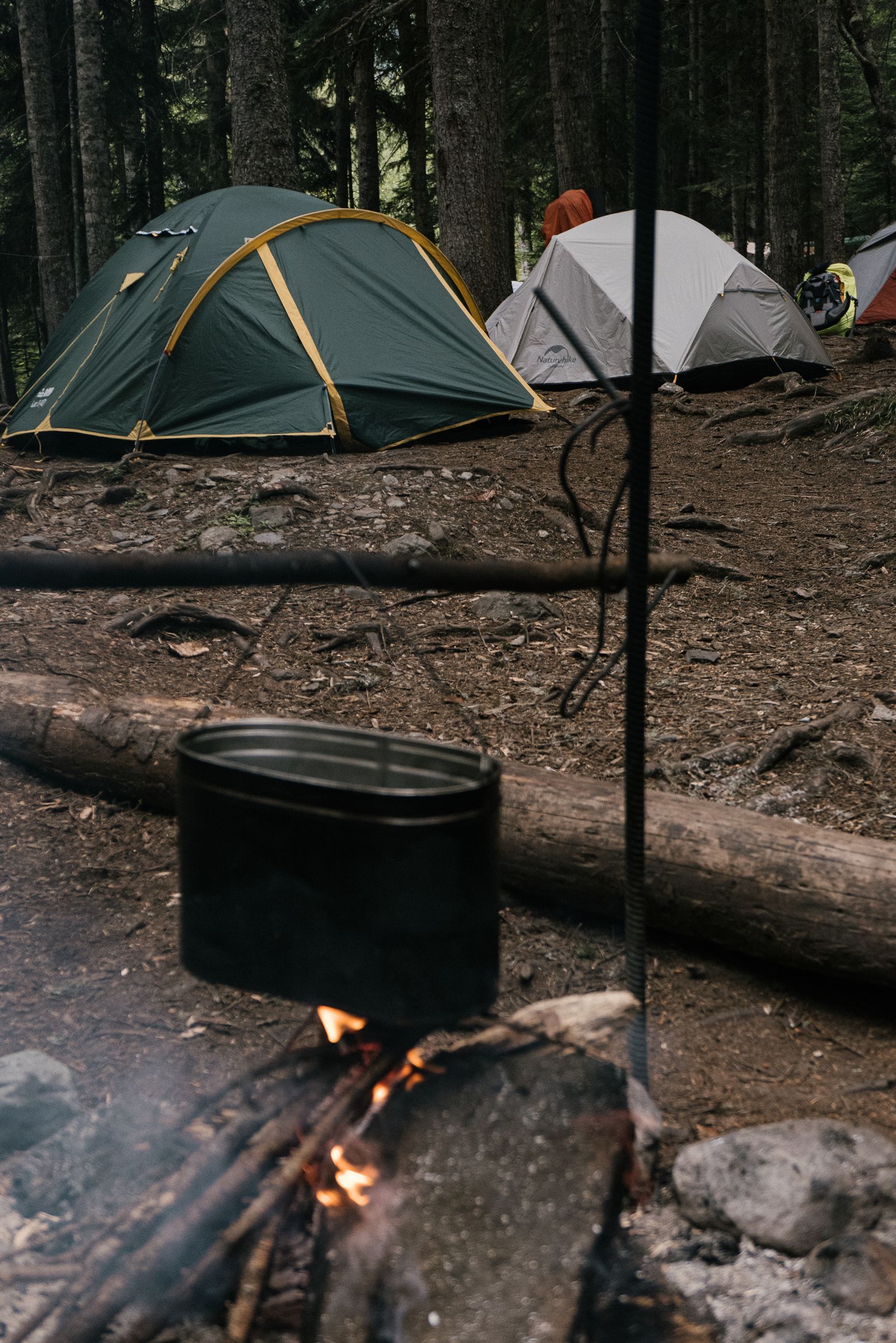
The 1960 planning exemption behind the five-van rule, why CLs and CSs are members-only, what facilities to expect, and how to book one properly.
A Certificated Location costs a third of a full club site, has room for five vans, and often has nothing in it but a tap and a chemical disposal point. Understanding why involves a piece of 1960 planning legislation that still shapes where UK tourers can park.
Where the five-van rule comes from
The Caravan Sites and Control of Development Act 1960 requires most land used for stationing caravans to hold a site licence from the local authority. Schedule 1 of that Act sets out the exemptions.
Paragraph 5 is the one that matters here. It allows an organisation granted exemption by the relevant government to issue certificates permitting land to be used for caravans without a site licence, subject to a maximum of five caravans on any certificated site at one time. Paragraph 4 covers supervised sites for up to 28 days. Paragraph 6 covers club meetings and rallies of up to five days.
Northern Ireland has its own equivalent in the Caravans Act (Northern Ireland) 1963. Tent camping sits under separate provisions of the Public Health Act 1936 in England and Wales, and camping certificates issued under those provisions cover tents, trailer tents and car-roof tents but specifically exclude caravans, campervans and motorhomes.
Both major clubs hold exempted organisation status. The Caravan and Motorhome Club calls its certificated land Certificated Locations, or CLs. The Camping and Caravanning Club calls its version Certificated Sites, or CSs. Same legislation, different branding.
Why they are members-only
The exemption is granted to the organisation and applies to that organisation's members. A landowner with a CL is not running a campsite open to the public. They are hosting members of the club that certified the land. Non-members must join the relevant club before staying, and the club investigates written complaints about member conduct on its certificated sites.
That single legal point explains most of what follows. The owner has no site licence, no obligation to install facilities, and no relationship with anyone outside the membership.
What you actually get
For a Caravan and Motorhome Club CL, the owner must provide at least half an acre of reasonably level land, safe access for caravans and motorhomes, safe drinking water, an emptying point for chemical waste, a bin for dry rubbish and public liability insurance. They must also be a member themselves.
That is the whole minimum. Everything above it is optional and varies enormously.
Across the club's network of more than 2,000 CLs, over 1,000 of them in England, more than 80% have electric hook-up, over 900 have some hardstanding pitches and toilets, and around 540 have showers. Do the arithmetic and roughly three quarters of CLs have no shower. Turn up expecting one and you will be disappointed.
Certificated Sites work to similar minimums: half an acre, safe access, regular waste collection, drinking water and a chemical toilet disposal facility. A CS may take five caravans or motorhomes plus up to ten tents, with six metres between units, for a maximum of 28 consecutive days. Site Officers inspect annually. Most open for the main season, March to October, though year-round operation is permitted where the ground stands up to it.
A CL can also take roof tents, tailgate tents, hitch tents and trailer tents within its five-unit allowance, but not conventional tents.
Why they cost a third of a club site
Prices are set by the owner, not the club. Caravan and Motorhome Club CLs start from £2.50 a night. The Camping and Caravanning Club quotes CS camping from £10 per unit per night. Against a hardstanding pitch with electric hook-up at a busy club site in August, a CL is routinely a third of the price and sometimes less.
The economics are straightforward. There is no site licence to hold, no warden on the payroll, no toilet block to heat, clean and insure, no reception, no barrier system and no business rates on a commercial holiday park. The land is usually already there doing something else, and the CL is a sideline on a working farm, a smallholding, a pub car park or a paddock behind a house. Five vans at £18 is £90 a night with almost no marginal cost.
The trade is that nobody is on duty. If the water goes off, the owner deals with it when they finish milking.
Finding and booking one
Neither club runs central booking for certificated sites. You find them through the club app, the Caravan and Motorhome Club's site directory, or the Camping and Caravanning Club's SiteSeeker, then contact the owner yourself by phone, email or their own website.
Have your membership number to hand before you ring. Owners are required to check it.
Things worth confirming on that call, because you will not get a booking confirmation email from a system:
- The pitch fee, and whether it covers two adults, children, an awning and a dog
- Whether electric hook-up is available and whether it costs extra
- Whether they take cards. Plenty still want cash
- The arrival window. Many owners want you there before a set hour
- Gate codes, the approach road, and whether the entrance suits your outfit length
- The cancellation policy, and whether any deposit is refundable
The Caravan and Motorhome Club notes that owners may charge deposits or booking fees which are not always refundable. Ask.
Etiquette
Certificated sites run on the assumption that everybody knows how to behave. Most of the unwritten rules exist for a reason.
Ring ahead rather than turning up. Five pitches fill fast in July, and an owner who is out on the tractor will not appreciate a caravan blocking the yard.
Arrive within the stated window. On a working farm, an 8pm arrival means somebody has to come back out.
Respect the six-metre spacing. It is a firebreak requirement and one of the conditions the certificate depends on.
Close every gate you open, and assume livestock are behind at least one of them.
Do not wash up at the drinking water tap. Carry the washing-up bowl back to your own sink or use the designated point.
Use the chemical disposal point only, and rinse it after. On a CL that point is frequently connected to a septic tank rather than mains drainage, which is also why bleach-heavy toilet chemicals are unpopular.
Keep dogs on leads. There are usually sheep on the other side of the hedge, and the owner's own dog is probably working.
Generators are generally unwelcome unless the owner says otherwise.
Pay before you leave, and if the owner is not about, leave the money where they asked and let them know.
When a CL is the wrong answer
A 7.5 metre outfit and a narrow farm gateway with a stone pillar on each side is a bad combination. Grass pitches in February are worse. If you need a shower block, a laundry, a play area or somewhere to put an awning on a level slab, book a club site and pay the difference.
Used correctly, though, a CL network of 2,000 sites turns a fortnight's touring budget into three weeks, and puts you in fields you would never otherwise see.
Common questions
What is a Certificated Location?+
A small private site licensed under an exemption in the Caravan Sites and Control of Development Act 1960, taking no more than five caravans at a time. The Caravan and Motorhome Club calls them Certificated Locations (CLs) and has more than 2,000; the Camping and Caravanning Club calls them Certificated Sites (CSs) and has over 800. The rules are the same, only the branding differs.
Do I have to be a club member to stay on a CL?+
Yes. The planning exemption is granted to the club and applies only to that club's members, so a CAMC CL is open to CAMC members and a C&CC CS to C&CC members. Owners will ask for your membership number when you book. Non-members must join first; there is no day-visitor or pay-on-arrival route around it.
Do Certificated Locations have showers and toilets?+
Often not. The minimum requirement is half an acre of reasonably level land, safe access, drinking water, chemical toilet disposal and rubbish collection. Roughly three quarters of CLs have no shower block at all, so you need a self-contained van. Facilities beyond the minimum vary from a single tap in a field to full hardstandings with hook-up.
How do you book a CL or CS?+
Direct with the owner. Neither club runs a central reservation system for these sites. Find one through the club app or directory, then phone, email or use the owner's own website, quoting your membership number. Many are first come, first served midweek, but coastal and Lake District CLs fill weeks ahead in summer.
Are CLs cheaper than club sites?+
Considerably. CLs routinely cost around a third of a full club site and sometimes less, because owners avoid site licensing fees, staffing and the cost of a toilet block. A CL at £15 to £20 a night against £30 to £40 on a main site pays back an annual membership within a few nights' touring.
Mentioned in this guide
Straight through to the directory entries.
Written by
Adrian TurcsanEditorAdrian runs campingandcaravanclubsites.com. He built the directory after finding that no single source listed the club-run campsite networks of the UK alongside the national caravan and camping clubs of the rest of Europe. Every entry on the site is checked against the club's own published listing before it goes live, and fields the clubs do not publish are left empty rather than estimated.